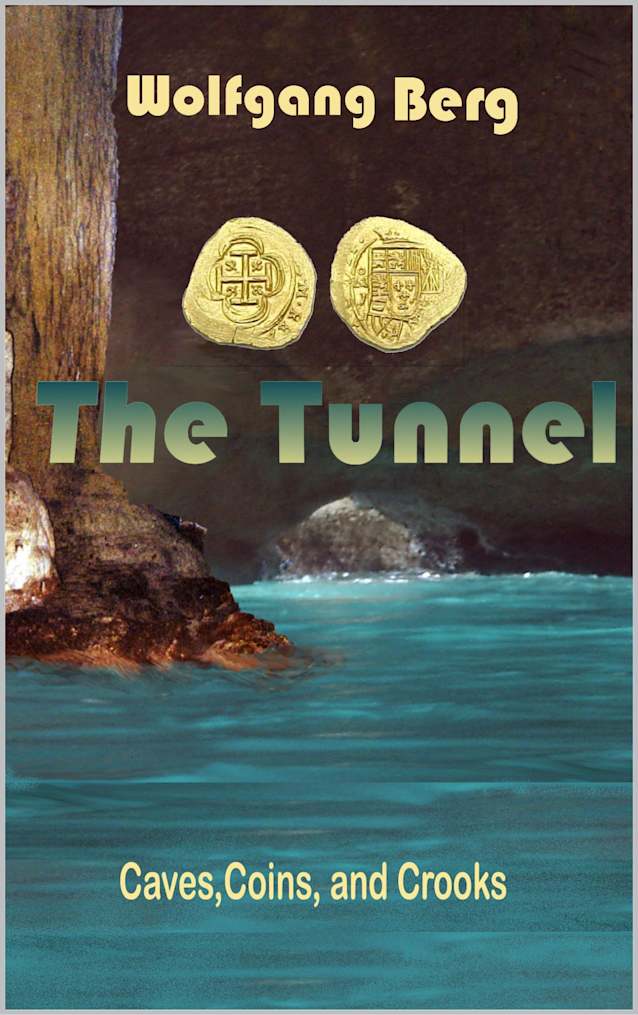
The Tunnel: Of caves, coins, and crooks
About
The reader, who is familiar with the Caribbean, may identify historic events, islands, countries, even specific locations, and certain sailing areas, or dive sites. However, any similarities with governments, their laws and proceedings or with companies and people are purely accidental and a product of fiction.
Although the appetite of governments claiming all or a share of treasures found on land or in their territorial waters are well-known, there is no evidence of unfair or illegal practices of any government body or other persons trying to capture salvaged treasures like the one being the subject in this story.
The specific location of the cave system in this book has been deliberately not disclosed and its description has been changed in order to avoid an invasion of treasure hunters and spelunkers to these beautiful islands and caves. The yacht SeaLife and her owners have always made it their mission to protect the natural beauty of the reefs and the islands.
For 300 years Spain had hauled vast amounts of gold and silver from its American colonies. A high percentage of ships was wrecked due to unpredictable weather and many were lost to pirates, particularly during the Spanish-English war around 1700, the high time of piracy in the Caribbean. Since the Spanish conducted perfect salvage operations, relatively small treasures have been found in modern times, although the wreck sites were often well documented. The much larger hidden bounty of pirates, however, has rarely been unearthed, mostly due to deliberate and skilled hiding at the most inaccessible caves and islands. It took an almost fatal accident to discover one of the largest treasures ever found.